Playbook7 min read
SaaS SEO when your buyer is not searching for you: what still works
Software buyers form a shortlist before they type a category keyword, so SaaS SEO has to win the questions they ask on the way. This is a plan for the pages that still get found and for checking whether AI answers name you.
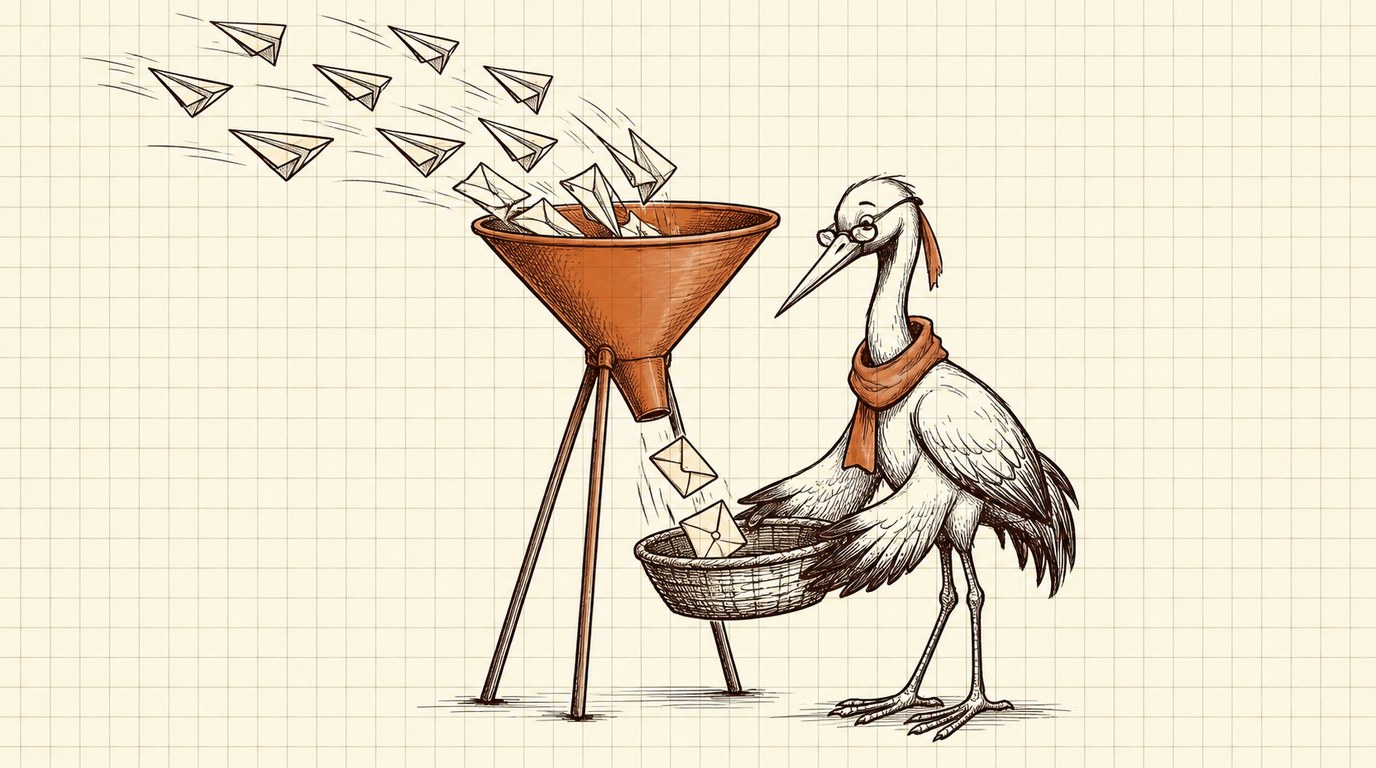
A SaaS company gets found today by answering the question a buyer has before they know your product exists: "how do I stop invoices going out late", not "invoice software". Category keywords still matter, but the shortlist is formed earlier, in AI answers, on review sites and in a colleague's message. Your pages have to be the ones those places quote.
Where does a software buyer look before they search?
Buyers put the first question to an assistant and look for confirmation on review sites afterwards. A summary of recent buyer research says 94 percent of B2B buyers use large language models during a purchasemarket. We have not seen the original survey, so treat the number as direction rather than measurement.
The older assumption was that a buyer types your category and compares ten blue links. Gartner expected a quarter of that traffic to disappear by 2026market, and an agency analysis of 1,600 SaaS companies in late 2024 reported steep organic losses at many of themmarket.
That does not make SEO pointless. It moves the work from ranking for a head term to being the page that answers a specific question, because assistants cite pages that answer specific questions. A step-by-step brand check in ChatGPT shows which questions already name you and which name a competitor.
Which pages get found when nobody searches your category?
Pages tied to a problem or a comparison get found, because the person typing already has a decision in mind. These are the types we would build first, in this order.
| Page type | Who lands on it | What it must contain |
|---|---|---|
| Alternatives to a named competitor | Buyer unhappy with a tool | Honest differences, pricing shape, who should stay |
| Integration page | Buyer whose stack is fixed | Setup steps, limits, screenshots |
| Use case by role or industry | Buyer who needs proof it fits | One workflow end to end |
| Bottom-of-funnel guide | Buyer ready to decide | Costs, migration effort, risks |
| Definition of the problem | Buyer still naming it | A direct answer in the first paragraph |
The first paragraph under each heading is the part an assistant lifts, so it carries the answer and the detail follows. An integration page that opens with a story about your roadmap gives the assistant nothing to quote.
Volume is a trap here. A site that publishes forty thin posts on adjacent topics teaches the market nothing, while the question of how many blog posts SEO needs a month depends on how much of each page is original to you. Four pages that carry your own screenshots, prices and limits do more than forty that restate the category.
What does a year of this look like?
A published case gives a rough shape. An agency that worked with the software company Nozzle describes four quarters: an audit and technical fixes, then product and industry pages, then bottom-of-funnel articles, then integrations and middle-of-funnel content. It reports a 477 percent rise in organic traffic, a run rate of 200 or more leads a month and a 90 percent rise in conversionsmarket.
Take it as a sequence to copy. A forecast it is not. The figures come from the agency that sold the work, we have no access to the client's analytics, and a big percentage rise from a small base is a different thing from the same rise on a large one. A traffic multiple of that size means the site ended at roughly 5.8 times its starting visitsestimate.
The order is the useful part. Pages that capture a buyer who is already deciding come before pages that educate one who is not, because they pay back sooner and give the later content something to link to. When you choose an SEO agency, ask which quarter each deliverable falls in and what is measured at the end of it.
How do you know it is working?
Count what the buyer does. For a SaaS site that means demo requests and trial sign-ups that start on an organic landing page, plus how often your brand appears in a fixed set of assistant questions you re-ask every month.
Pick a small set of questions and freeze the wording. Twenty questions asked identically each month give you a trend you can read. A fresh prompt every week gives you noise. Write down which competitor is named instead of you, since that tells you which comparison page to build next.
Ask for the same reporting from a supplier. A contract checklist for SEO work lists what should be defined before signing, and for a SaaS company the key line is how a lead is counted and where it is recorded.

Should a SaaS team write this in house?
Product knowledge decides it. Integration, use-case and alternative pages need someone who has used the product and read the competitor's pricing page, and that person is usually an employee. An outside writer can structure and edit, and the facts have to come from you.
That is the same trade-off as a freelance writer against an agency: the cheaper option works when your team supplies the substance and fails when it expects the writer to invent it. If nobody on your side can spend two hours a week on facts, the programme will produce pages that read like every other SaaS blog.
Sources
- Gartner, prediction that search engine volume will drop 25 percent by 2026 as AI chatbots take over, via press coverage. February 2024.
- Indie Hackers, "B2B SaaS SEO in 2026: how high intent search drives pipeline, not just traffic": buyer use of large language models, secondhand. https://www.indiehackers.com/post/b2b-saas-seo-in-2026-how-high-intent-search-drives-pipeline-not-just-traffic-31809bf8c6, 2026.
- Gripped, "The Ultimate SEO Strategy Guide for B2B SaaS Companies": Nozzle case, four-quarter sequence, traffic, leads and conversion figures. https://gripped.io/b2b-seo/the-ultimate-seo-strategy-guide-for-b2b-saas-companies, retrieved 13.10.2026.
- Gripped, blog teaser on declining SaaS organic traffic across 1,600 companies. https://gripped.io/, 2025.