Playbook11 min read
Do you own the blog posts your SEO agency wrote if you stop paying?
Under U.S. law, the person who writes a post owns it until a signed document says otherwise. If your agency contract is silent, you probably hold a licence to use the posts and not the copyright.

Do you still own the posts if you stop paying your agency?
It depends on what the contract says about transfer of rights, and a contract that says nothing leaves the copyright with the writer. In that case you hold, at most, a licence to keep using the posts on your own site. This is an editorial reading of U.S. law and not legal advice, and other countries have different rules.
The two questions to ask are separate. Who owns the copyright, and what are you allowed to do with the text today? Ownership is decided by the signed paper. Permission to keep the posts online is decided by the licence, which can be written or implied from the way the work was ordered, delivered and paid for. The ownership terms also decide how a blog strategy can change once AI answers lead.
Most disputes come from mixing the two. A site owner pays eight invoices, the posts are live, and the owner assumes the posts are theirs. The agency assumes the opposite until the last invoice clears. When you are picking an SEO agency, this clause is cheaper to settle before the first post than after the breakup.
What does the law say when the contract is silent?
The writer is the default owner, and the person who commissioned the text is not. In CCNV v. Reid, decided on 5 June 1989, the Supreme Court held that a commissioned sculptor was an independent contractor and kept the copyright because there was no qualifying written agreement market.
An agency that uses freelancers adds a second layer. If the agency itself holds no signed transfer from the freelancer, it cannot pass on rights it never received. Ask which of the two situations you are in. Leaving the agency also raises ranking questions, which the guide to firing an SEO agency answers.
The statute is direct about the form: a transfer of ownership, including an exclusive licence, must be in writing and signed by the owner market. An email thread can meet that test if the wording is clear and the owner signed, which is why the wording matters more than the document format.
Does "work made for hire" cover a blog post?
Usually it does not, because a blog post is not a named category. For commissioned work, the law lists nine categories: a contribution to a collective work, part of an audiovisual work, a translation, a supplementary work, a compilation, an instructional text, a test, answer material and an atlas market. Even then, both parties must sign a statement that the work is made for hire market.
A standalone article for a company site does not fit those boxes cleanly, so a "work made for hire" label in the contract may not do what the client expects. The reliable tool is an assignment, which moves ownership by signed writing whatever category the text falls into.
| Contract wording | Who holds the copyright | What you can do |
|---|---|---|
| Silent on ownership | The writer or agency | Use the posts under an implied licence, scope unclear |
| "Work made for hire" only | Disputed for blog posts, since the category list is narrow | Rely on it only with a back-up assignment clause |
| Assignment on creation | You, from the moment of writing | Edit, republish and move the posts freely |
| Assignment on full payment | Agency until the last invoice clears | Use under licence, own it only after paying |
| Licence only, "while you are a client" | Agency | Lose the right to use the posts when the retainer ends |
The clause that costs real money later is the one that says ownership passes "upon full payment" without defining what full payment covers.
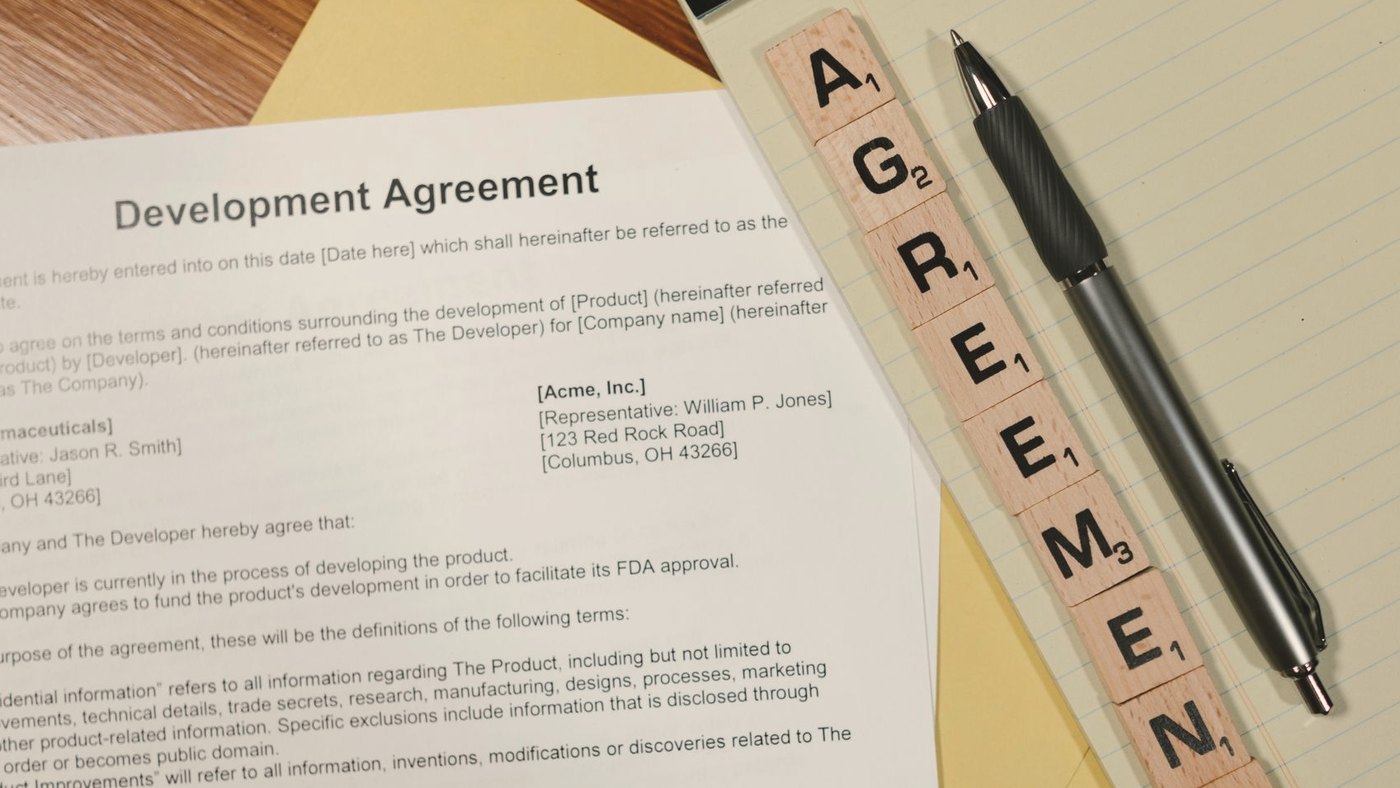
What happens to your posts when you stop paying?
If you hold an implied licence, the posts may stay online, but the legal position is unsettled. Courts have found that an implied non-exclusive licence can arise from delivery and payment even when payment was only partial, and other courts have treated an implied licence as revocable for non-payment market. The same decisions show how much depends on the facts and the jurisdiction.
The licence is also limited to the use the parties had in mind. A court asks what both sides expected when the posts were ordered, and use beyond that scope can be infringement market. Republishing the archive on a second domain, selling it to a buyer of your business or handing it to a new agency to rewrite is where an implied licence gets thin.
For an agency to enforce a claim in court, the agency must first hold an issued registration certificate, since a pending application is not enough market. Most agencies do not register blog posts one by one, so a threat of removal is often stronger than the claim behind it. Do not rely on that when the posts earn you leads, and settle the position in writing.
Costs matter here too. An agency that writes posts for a SaaS company often reuses structure and research across clients, and a licence-only clause lets it do so freely with your text as well.
Can an author take rights back years later?
Yes, for assignments. Section 203 lets an author terminate an assignment, but not a true work made for hire, during a five-year window beginning 35 years after the grant market. That window is far outside the life of a typical blog, so it matters mainly if you buy a company or an archive of older content.
Does AI-written text change who owns it?
It can leave a gap. The U.S. Copyright Office said in its report of 29 January 2025 that copyright requires human authorship, and that even a detailed prompt does not make a person the author of what an AI system outputs market. Human edits, selection and arrangement can still be protected.
If an agency drafts posts with AI and edits lightly, the assignment clause may transfer little that is protectable. That is one reason to ask how the posts are produced, and a team that writes briefs for a content writer should say plainly where a human edits.
Some buyers go the other way and skip ownership questions because rankings matter more. Ownership still shapes the exit, because the new provider needs a clear right to update the posts. You can check what the old posts do for you first with a method for measuring a blog before you decide what is worth fighting over.

Which clauses settle ownership before you sign?
Four sentences cover most of the risk, and each can be tested by a person who is not a lawyer. Buyer guides name an agency that keeps the copyright on produced content as a red flag, and tell clients to own the content and the accounts and to leave with everything built for them market.
- Assignment on creation: "The agency assigns to the client all rights in the deliverables on creation."
- Subcontractor warranty: the agency confirms it holds signed assignments from every writer it uses.
- Payment independence: a billing dispute pauses services and does not pause your right to the posts already live.
- Handover: all drafts, images and source files are delivered at exit, with a named deadline.
Frequently asked questions
Who owns blog posts written by an SEO agency if the contract says nothing?
The writer holds the copyright by default, and the client usually holds an implied licence to use the posts for the purpose they were ordered for. The licence is narrower and less certain than ownership, and a signed assignment fixes the gap.
Does paying every invoice give me the copyright?
Payment alone does not transfer copyright. A transfer needs a signed writing, so a clause that moves rights on payment is what turns paid invoices into ownership.
Can I keep the posts online if I stop paying?
Often yes in practice, but the law is unsettled. Some courts treat an implied licence as revocable for non-payment and others treat it as unconditional, so the safest course is to settle the dispute in writing and not to rely on the licence alone.
Can the agency reuse my posts for another client?
If the agency holds the copyright, nothing in copyright law stops it from reusing the text, and your only protection is a clause forbidding it. Ask for an assignment plus a warranty that the posts are original.
Does AI-written content have a copyright owner?
The U.S. Copyright Office requires human authorship, so purely machine-generated passages may carry no copyright at all. Parts a human edits, selects or arranges can be protected, and the agency should say how much of each post that covers.
Sources
- Cornell Legal Information Institute, 17 U.S.C. § 101, definition of "work made for hire" with the nine categories and the signed-writing requirement.
- U.S. Copyright Office, Circular 30, Works Made for Hire. The same two conditions for commissioned work.
- Cornell LII and Harvard Berkman Klein Center, Community for Creative Non-Violence v. Reid, 490 U.S. 730, 5 June 1989. A commissioned contractor keeps the copyright without a qualifying agreement.
- GovInfo, 17 U.S.C. § 204 (2011 edition), and Digital Media Law Project, "Creating a Written Contract to Transfer or License Rights Under Copyright". Transfers need a signed writing; non-exclusive licences can be implied.
- Mondaq, "Court finds implied license allowed cannabis brand to use advertising materials created by freelancer", 2022, and Digital Media Law Project. Scope of an implied licence.
- Studicata summary of Smith v. Mikki More, S.D.N.Y. 2014, and Loeb & Loeb on Beholder Productions v. Catona, 2009. Disagreement on revoking an implied licence for non-payment.
- Columbia Kernochan Center, "Getting Your Rights Back", and Morgan Lewis, "A Second Bite at the Apple: Section 203 Recapture Rights", October 2024. The 35-year termination window.
- Sidley Data Matters, 7 February 2025, and Skadden, February 2025. The U.S. Copyright Office report of 29 January 2025 on human authorship and AI output.
- Cooley and Jones Day, March 2019, on Fourth Estate v. Wall-Street.com, decided 4 March 2019. Registration certificate before suit.
- RankAI, "What to look for in an SEO contract and billing model", 2026, and Lilach Bullock, "Before signing a long-term SEO contract", 2026. Agency retaining copyright as a red flag.